Many businesses today need warehousing, inventory management, transportation, order fulfillment, returns processing, and responsive customer service — all working together seamlessly. Managing every one of these operations internally is costly and complex, which is why many organizations rely on third-party logistics (3PL) providers.
Third-party logistics or 3PL refers to outsourcing logistics operations to an expert services provider that manages some or all aspects of the supply chain. It is a multi-layered service model where the 3PL provider acts as an extension of the logistics brand.
The process may appear simple on the surface, but behind every successful delivery is a complex network of interconnected operations. Every shipment passes through multiple stakeholders, each responsible for a different stage of the journey. A typical flow looks like this:
Brand → 3PL → Warehouse Carrier → Local delivery partner →Customer
Unlike traditional customer support, 3P requires coordinating information across multiple systems, carriers, warehouses, and stakeholders. As a result, customer inquiries often span a wide range of operational issues, including:
- Shipment tracking
- Delivery delays
- Inventory availability
- Proof of delivery (POD)
- Customs documentation
- Billing questions
- Order modifications
As your 3PL business grows, so does the complexity of managing these interactions. More clients, carrier partners, and fulfillment locations lead to a higher volume of inquiries, service exceptions, and cross-functional coordination. Maintaining a seamless flow of communication across the entire logistics journey therefore becomes essential.
Meeting this demand requires a customer service operation that scales alongside your logistics network. Because in 3PL, every customer interaction reflects the quality of your service.
Common challenges faced by 3PL providers
High inquiry volumes: Shipment tracking requests account for a large percentage of customer interactions. Agents repeatedly answer the same questions every day.
Multiple disconnected systems: Information is spread across WMS, TMS, ERP platforms, carrier portals, email inboxes, and document repositories.
Document retrieval: Finding Bills of lading (BOL), POD, freight invoices, customs documents, and delivery receipts often requires manual searches.
Delivery disruptions: Weather delays, missed pickups, damaged freight, customs issues, and carrier exceptions all generate customer inquiries that require immediate attention.
Seasonal spikes: Holiday periods and promotional events significantly increase shipment volumes while customer expectations remain unchanged.
How AI improves 3PL customer service
Artificial intelligence is helping 3PL logistics providers automate repetitive service tasks while giving agents the tools they need to resolve complex issues faster. Instead of searching multiple systems manually, AI can retrieve information instantly, understand customer intent, automate workflows, and recommend the next best action.
Some of the most valuable capabilities include:
- AI-powered virtual assistants that answer shipment status, delivery ETA, POD, returns, and inventory inquiries without agent intervention.
- Conversational AI that understands customer intent, answers routine shipment inquiries, performs service actions, and seamlessly hands over complex conversations to human agents.
- AI-powered agent assistance that summarizes customer conversations, recommends responses, retrieves shipment details, identifies the next best action, and helps agents resolve cases faster.
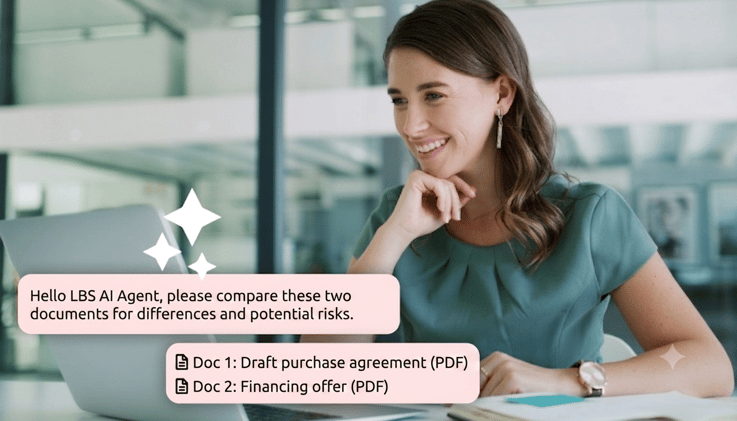
- Intelligent document processing and data extraction that automatically captures shipment IDs, tracking numbers, purchase orders, customer details, carrier information, delivery dates, and other key data from invoices, BOL, POD, customs documents, and shipping labels.
For example: POD requests are among the most common inquiries handled by 3PL customer service teams. Instead of searching for delivery records manually and responding to each request individually, AI can automatically retrieve the relevant POD and share it with the customer. This reduces response times, minimizes manual effort, and allows agents to focus on more complex customer requests.
Building a connected 3PL service ecosystem
Organizations that have cracked logistics always build a service ecosystem rather than relying on standalone tools. Some key technologies part of the service ecosystem include:
- Third-party software integration: Seamlessly connects TMS, WMS, ERP, CRM, and carrier systems to provide customer service teams with accurate, real-time operational data.
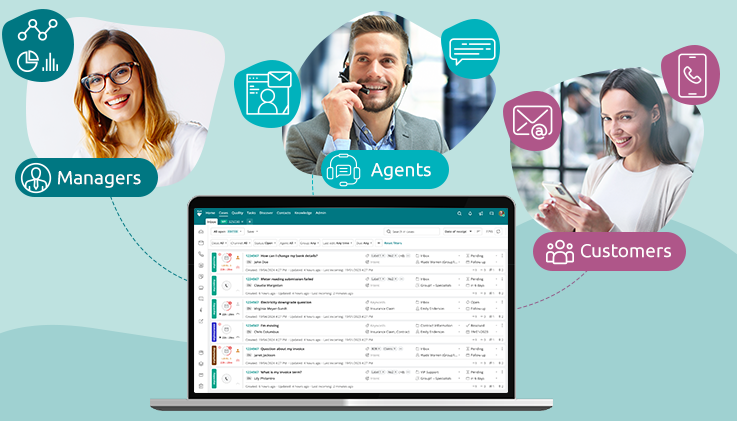
- Omnichannel customer communication: Centralizes inquiries from email, phone, chat, WhatsApp, customer portals, and social media into a single workspace.
- AI-powered case management: Automatically classifies, prioritizes, and routes customer inquiries to the appropriate team for faster resolution.
- Customer self-service portals: Enable customers to track shipments, access POD, submit service requests, and retrieve shipping documents independently.
- Workflow automation: Streamlines customer service processes by automating case creation, approvals, escalations, follow-ups, and exception handling.

Better 3PL customer service pays off
Customer service strengthens the entire logistics operation. When communication becomes faster and more consistent, the benefits extend far beyond the support desk. Organizations that invest in modern 3PL customer service can expect:
- Lower operational friction by reducing the back-and-forth between customer service, warehouse teams, carriers, and dispatchers.
-
Higher service capacity by handling more shipments and customer inquiries without proportionally increasing support headcount.
- Greater customer confidence through accurate information and consistent communication across every touchpoint.
- Improved cross-functional collaboration by connecting customer service with warehouse, transportation, and carrier operations through a shared view of every shipment.
- More informed business decisions through analytics that reveal recurring service issues, carrier performance trends, and customer behavior.
- A stronger competitive position by turning customer service into a value-added capability rather than a cost center.
Service in motion
Logistics brands invest heavily in transportation networks and warehouse infrastructure. Yet growth is often limited by something less visible: communication. Every shipment creates expectations. Every delay creates questions. Every exception either strengthens or weakens customer trust. 3PL customer service sits at the intersection of operations and experience. Organizations that pair logistics expertise with AI-powered customer service resolve issues faster and scale more efficiently. ThinkOwl makes this possible!
In an industry built on movement, communication keeps everything connected. With the right platform, 3PL providers turn customer service from a cost center into a competitive advantage. Explore solutions by ThinkOwl, and schedule a free demo.