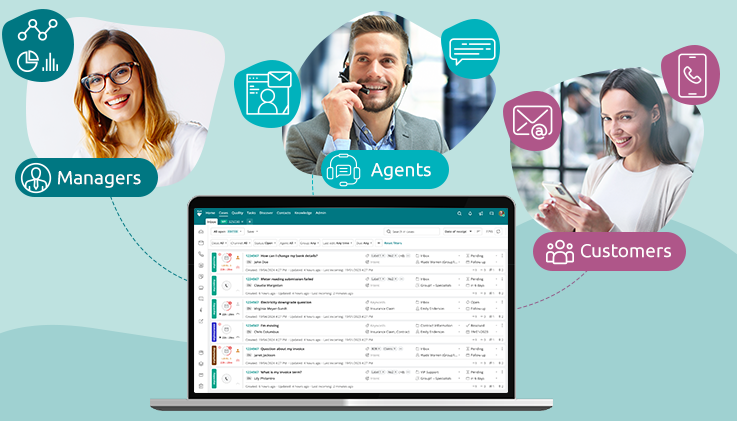
Many companies in customer service work with a multitude of individual tools: a ticketing system for emails, a call center tool for telephony, a separate quality management system, an external chatbot solution, and in between countless workarounds and manual processes.
What seems like a quick fix in the short term becomes a growth inhibitor in the long run. So why not opt for an integrated platform like ThinkOwl from the start?
The reality: A proliferation of tools in customer service
A typical example:
- Email system = Helpdesk A
- Voice solution = Cloud telephony provider B
- WhatsApp = Third party platform C
- Quality management = Excel or QM tool D
- Bot solution = Chatbot framework E
Each tool works independently, but: Data is isolated. Communication is fragmented. Processes are incomplete.
The consequences:
- Communication silos
- Redundant data entry
- No continuous view of the customer journey
- High training and maintenance costs
- High susceptibility to errors in escalations or SLA management
The solution: A well designed service platform
ThinkOwl combines all functions in a modular yet integrated system:
- Area: Omnichannel Ticketing, ThinkOwl Module: OwlDesk
- Area: Voice and IVR, ThinkOwl Module: OwlVoice
- Area: Quality and Coaching, ThinkOwl Module: OwlCoach
- Area: Automation, ThinkOwl Module: OwlForce
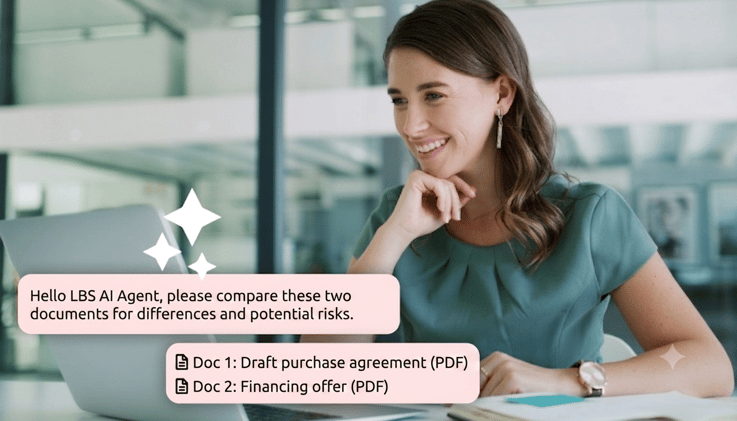
- Area: Secure AI tools, ThinkOwl Module: OwlSpot
All modules are natively coordinated, use the same database, and can be combined as needed depending on company requirements and maturity level.
Advantages of the platform strategy
1. Cross channel customer context
Whether a customer writes via WhatsApp, then calls, or later inquires via email, ThinkOwl recognizes the connections and shows agents all interactions in a case file. This saves time and increases the first contact resolution rate.
2. Centralized control and automation
Rules, workflows, SLAs, and escalations are managed centrally instead of being handled in multiple systems. Processes can be automated across all channels, for example:
- A bot starts in chat
- It detects an escalation
- It forwards the call to voice
- OwlCoach evaluates call quality
- OwlForce handles post processing
3. Cost advantages and reduced complexity
Service teams spend less time managing tools and more time solving customer issues.
-
No separate licenses for multiple systems
-
No additional interfaces or maintenance costs
- Only one interface, one login, one support team
- Faster onboarding and lower error rates
4. Better data, better decisions
All data ends up in a central data structure including communication histories, process status, quality metrics, coaching data, timestamps, and channels. ThinkOwl provides precise reports and dashboards based on this data, not just per channel but across all channels.
5. Flexible, scalable, and future proof
ThinkOwl works out of the box but grows with your needs:
- Start with email and chat, later expand to voice, bots, and automation
- New teams, languages, or locations can be easily managed through a multi tenant structure
- Future readiness through continuous development in API, AI, and security
Conclusion
Companies that still rely on a collection of disconnected tools today risk falling behind tomorrow. The future belongs to platforms that intelligently combine channels, processes, quality, and self service. ThinkOwl offers exactly that in a modular, integrated, and AI powered way. ThinkOwl is not just another building block. It is the foundation for modern customer service. Explore solutions by ThinkOwl, and book a free demo.