Modern customer communication is more diverse than ever: customers write emails, chat via WhatsApp, post on social media, call, or use web forms. For companies, this presents a challenge – how can all these channels be integrated efficiently, consistently, and in a customer-friendly way?
Many systems promise omnichannel capabilities. But ThinkOwl delivers true channel integration – automated and context-aware. This article shows how ThinkOwl enables seamless communication across all touchpoints and why this is so important.
The challenge: The channel jungle in customer service
Without true integration, even the best service teams struggle to deliver a consistent experience across channels. In many companies, the situation looks like this:
- Emails end up in the classic help desk
- WhatsApp messages are answered using a separate tool
- Telephony is handled by an external call center
- Chat is managed by a plugin on the website
- Social media is handled by the marketing team
The problem: Each channel operates in isolation. Context gets lost. Customers are forced to repeat information, and agents are pushed to juggle too many tools, which slows service and creates frustration on both sides.
The solution: ThinkOwl – truly integrated omnichannel
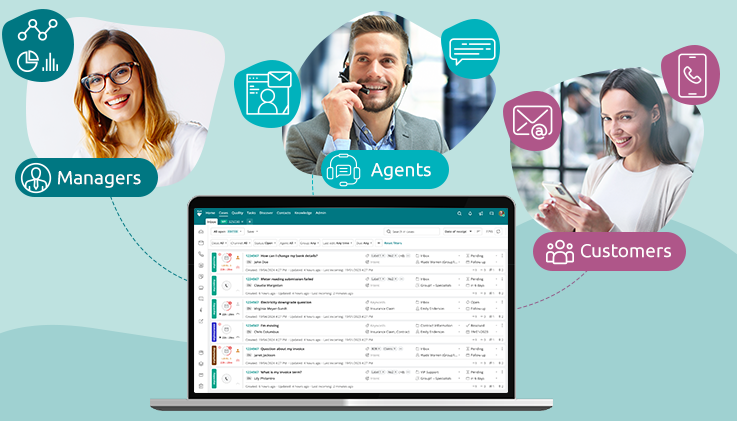
ThinkOwl takes a different approach. All communication channels converge on a central platform and are automatically combined into a single customer case – regardless of the input channel. Supported channels are:
- WhatsApp & Messenger
- Webchat & website forms
- Voice & telephony
- Social media (e.g., Facebook)
- Mobile messengers (optional)
- Postal mail & uploads (via OCR processing)

Cross-channel, but not channel-identical
ThinkOwl handles each channel according to its own strengths, but integrates them into a shared user experience.
Example: A customer starts via chat, later receives a PDF via email, and then calls. In ThinkOwl, the agent sees:
- The complete communication history
- All attachments and automatic classifications
- The associated workflows and statuses
- Previous inquiries and solutions
Result: No loss of context. No repetitions. Better service.
Automated processes – regardless of the channel
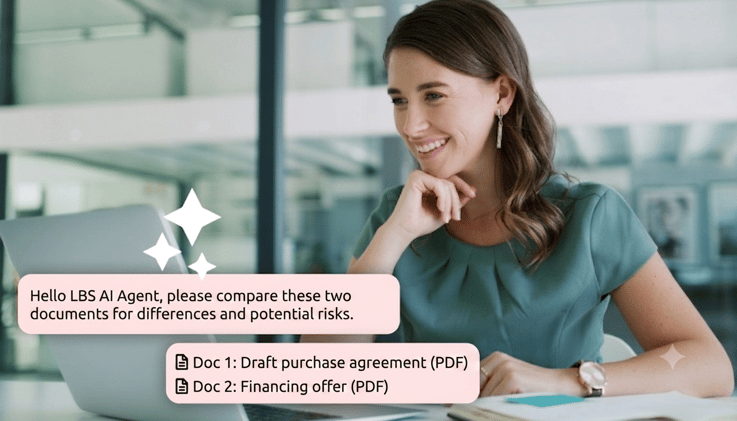
Thanks to ThinkOwl's AI engine, many processes run in the background – independently of the channel:
- Automatic assignment to appropriate teams
- Suggested responses including text snippets
- Workflow triggering (e.g., escalation, bot handover, forwarding)
- Speech analysis & transcripts for calls
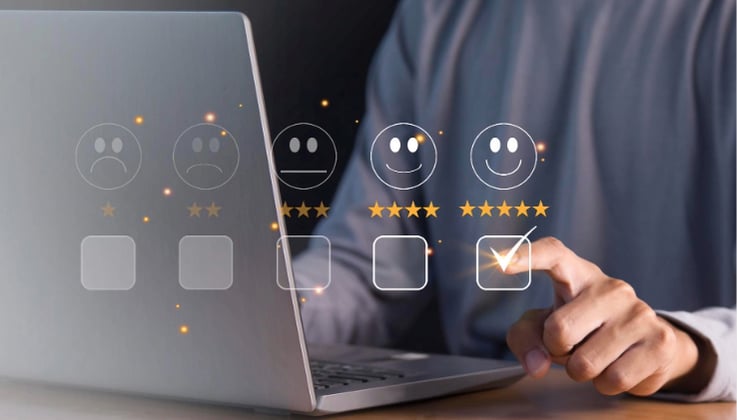
- Quality assessment across channels
Unified reports & KPIs
A major advantage of channel integration: All data flows into a central reporting system. This enables:
- Comparison of channels (e.g., resolution speed, customer satisfaction)
- Analysis of omnichannel cases (e.g., identifying media breaks)
- Resource planning & forecasting based on real channel behavior
Designed with security in mind
Every channel in ThinkOwl meets strict data protection requirements. Customer data is handled securely, stored in encrypted form, and archived when required. In addition, it offers:
- Role-based access controls
- Audit trails per channel
- Multi-tenancy for different brands or service providers
Conclusion: Channel integration as a true service booster
ThinkOwl brings all customer channels together into one consistent service experience, so conversations stay connected from start to finish. One case. All channels. One goal: a better customer experience. With ThinkOwl, omnichannel becomes not only possible but also measurable – for employees and decision-makers. Explore solutions by ThinkOwl, and book a free demo.