Customers want quick help. They do not want to wait, pull tickets, or tell the same story multiple times. In many cases, they simply want to find an answer themselves, fill out a form, or check a status at any time of day or night. This is precisely why self-service options are becoming increasingly important for modern service organizations.
But as simple as the idea sounds, its implementation is complex. Good self-service must be intelligent, accessible, understandable, and fully integrated. Only then will it truly be used and simultaneously relieve the customer service team significantly.
When self-service misses the mark
Many self-service initiatives fail because they are built from an internal perspective rather than a customer perspective. Customers are forced through rigid menus, unclear forms, or dead end bot conversations that do not actually solve their problem.
Successful self-service begins by identifying the most frequent customer requests and designing simple, guided journeys that solve them quickly without friction or unnecessary steps.
ThinkOwl offers the perfect foundation for a self-service strategy that focuses not only on automation but on a genuine customer experience. The goal is not to push customers away, but to offer them meaningful ways to resolve their issues quickly and independently.
How ThinkOwl powers intelligent self-service
The basis for this is ThinkOwl's omnichannel conversational bot. It communicates across all common channels such as web chat, messengers like WhatsApp or Facebook, and, in conjunction with OwlVoice, even via voice. It is not a static question and answer system, but a conversational partner that reacts contextually, collects and validates information, and can make decisions.
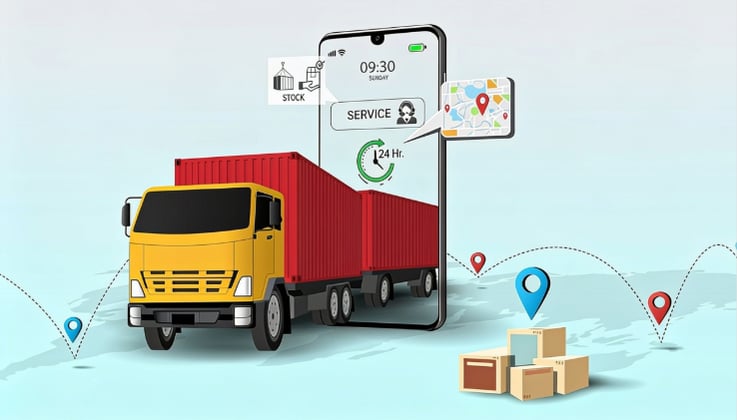
A practical example. A customer asks about the delivery status of their order. Instead of creating a ticket, the conversational bot initiates a request for the order number, compares the information with the ERP system, and provides a direct answer within seconds. If there are further questions or intervention is necessary, the bot hands the case, along with the context, to an agent seamlessly and without any data loss.
But self-service in ThinkOwl goes far beyond bots. The platform offers the ability to provide structured forms that are precisely tailored to specific processes, from address changes and cancellations to damage reports. These forms can be configured with logic, conditions, and automations, allowing them to not only collect information but also trigger processes.
Self-service forms improve service operations in several ways:
- Customers provide complete information from the start
- Requests are routed automatically to the correct process
- Manual clarification loops are reduced
- Processing time drops significantly
- Agents receive ready to process cases instead of incomplete tickets
This means that when a customer submits a contract change request, the appropriate workflow is automatically initiated, internal checks are triggered, and a confirmation is sent without any manual intervention from an agent. If manual intervention is needed, everything is prepared, the process is fully documented, and processing takes only seconds.

Self service as part of the service ecosystem
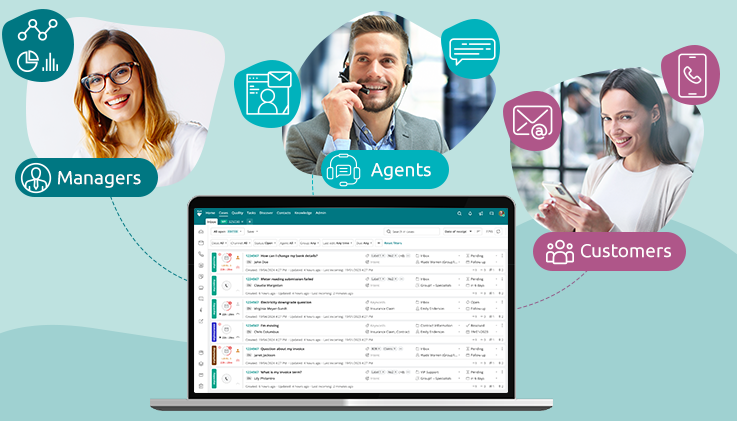
Another advantage is that self-service in ThinkOwl is not isolated but fully integrated into the rest of the service architecture. All processes, whether answered by a bot or submitted by the customer themselves, end up in the central ticketing system, where they can be evaluated, analyzed, and, if necessary, further processed.
This integration not only ensures transparency but also builds trust. Customers notice that their concerns are taken seriously even when they have taken the initiative themselves. For companies, it provides the opportunity to maintain service quality while the volume of requests increases.
Especially during periods of high demand, seasonal peaks, product launches, or crises, the system's strengths become apparent. ThinkOwl ensures that first level issues are handled automatically, while the team can focus on complex cases. This increases not only efficiency but also satisfaction on both sides.
Conclusion
Implementing self-service with ThinkOwl means more than simply adding another tool. It means building a tangible digital service solution that can evolve with the company, scalable, intelligent, and future ready. Because good self service is not about reducing customer contact. It is a new form of connection. And ThinkOwl makes it possible. Explore solutions by ThinkOwl, and schedule a free demo.